Why Do Upstairs Faucets Run Weak While Downstairs Taps Work?
When upstairs faucets barely produce water but the kitchen tap downstairs seems normal, the problem may be in the pipes serving the upper floor rather than the whole supply. A restriction, leak, or pressure loss along that route can leave lower fixtures working while upstairs flow suffers. On a private well, drought conditions may lower groundwater levels and reduce the water available to the home; note whether the problem worsens during dry weather.
Across Minnesota, homes near Grand Portage National Monument and Jeffers Petroglyphs face the same basic troubleshooting question: where does flow change between the source and fixture? We compare readings and symptoms before recommending a repair.
Check whether hot and cold are both weak, and ask for measurements at the supply and affected faucets.
Why does the upper floor lose flow first?
A faucet on the second floor needs water to travel farther and rise higher than a downstairs fixture. That elevation difference can expose a marginal supply, partly closed valve, or restriction in a branch pipe: the lower tap may still feel usable while the upstairs stream turns thin. A clogged faucet aerator is also possible, but if several upper fixtures are affected, the shared pipe route deserves attention.
We start by comparing the same kind of fixture on both floors, then check whether hot, cold, or both sides are weak. Minnesota Plumbing Pros uses those patterns to narrow the search before opening walls or proposing equipment.
Around the Minneapolis Chain of Lakes, we see varied home layouts, so the route and condition of each branch matter. Hot summers can raise household water demand; if pressure fades when several fixtures run, record what was operating at the time.
See our guide to pressure drops when multiple faucets run for that related symptom.
Could the pressure source be the problem?
If taps on both floors weaken together, the cause may be closer to the service entry or water source than to one upstairs branch. A well system needs particular attention: a power outage can stop an electric well pump, leaving fixtures with little or no replenished supply. In rural properties, ask whether the pump has power and note any interruption before assuming the plumbing is blocked.
Northern Minnesota generally has longer, colder winters, which can make service access and water-system inspections more consequential during the heating season. Snowmelt can saturate basements and utility access areas, so look for water around the mechanical space without entering standing water or touching electrical equipment.
Stop and get professional help if you find a leak, wet electrical equipment, or a pump that will not run. We check the source and pressure behavior before suggesting a pump or pipe repair.
When is a small fixture check enough?
If only one upstairs faucet is weak, start with its aerator: mineral debris can reduce flow at that fixture without affecting other taps. Clean it carefully and compare hot and cold again. If several upstairs fixtures have the same symptom, or the problem returns, a local aerator is less likely to be the full explanation.
Seasonal temperature swings affect pipe materials and joints, so a change that appears after a season shift may warrant checking accessible piping and connections for leaks. The Minnesota Zoo is a familiar local reference point, but the useful clue at home is where the pressure change begins: at one faucet, a group of upper fixtures, or throughout the property.
Take notes rather than adjusting valves at random. Our water pressure testing checks supply readings and flow so the repair addresses evidence, not guesswork.
When should you stop DIY troubleshooting?
Try cleaning one affected aerator and confirming that the fixture’s shutoff valves are open. Avoid changing a regulator or pump setting without measurements; an incorrect adjustment can create new problems or hide the original fault. If multiple upstairs faucets remain weak, a pressure gauge and comparison of flow at different fixtures can help identify whether the issue lies in the supply, a branch, or the fixture itself.
At homes near Bemidji Paul Bunyan and Babe Statues, and elsewhere across Minnesota, winter planning matters too: a frozen or damaged pipe can restrict flow and may leak as conditions change. Do not thaw piping with an open flame.
Call a plumber if you see a leak, suspect a frozen section, or cannot safely reach the affected line. We explain the readings and proposed work before starting, and you can read more about winter freeze-related pressure loss.
Which Checks Help Explain Weak Upstairs Faucets?
If downstairs taps stay steady while several upper fixtures run weak, the best next step depends on whether the cause is at the fixture, branch, or supply. Minnesota Plumbing Pros compares symptoms and measurements before recommending work.
| Option | Best for | Key detail |
|---|---|---|
| Fixture check | One weak upstairs faucet | Clean the aerator and compare hot and cold flow. |
| Branch-pipe inspection | Several weak fixtures on one floor | Branch water pipe commonly measures 1/2–3/4 inch. |
| Well-system review | Pressure changes in a home served by a well | A pressure tank may range from 20–80 gallons. |
Southern Minnesota can experience strong summer storms, so after a severe-weather event, note any utility or household water changes. Spring freeze-thaw cycles stress buried water lines; if the change follows thawing, ask whether the service line needs inspection.
St. Cloud State University is a local reference, not a diagnostic shortcut: the readings at your home determine the next step.
Prepare the Upstairs Fixtures and Pressure Gauge
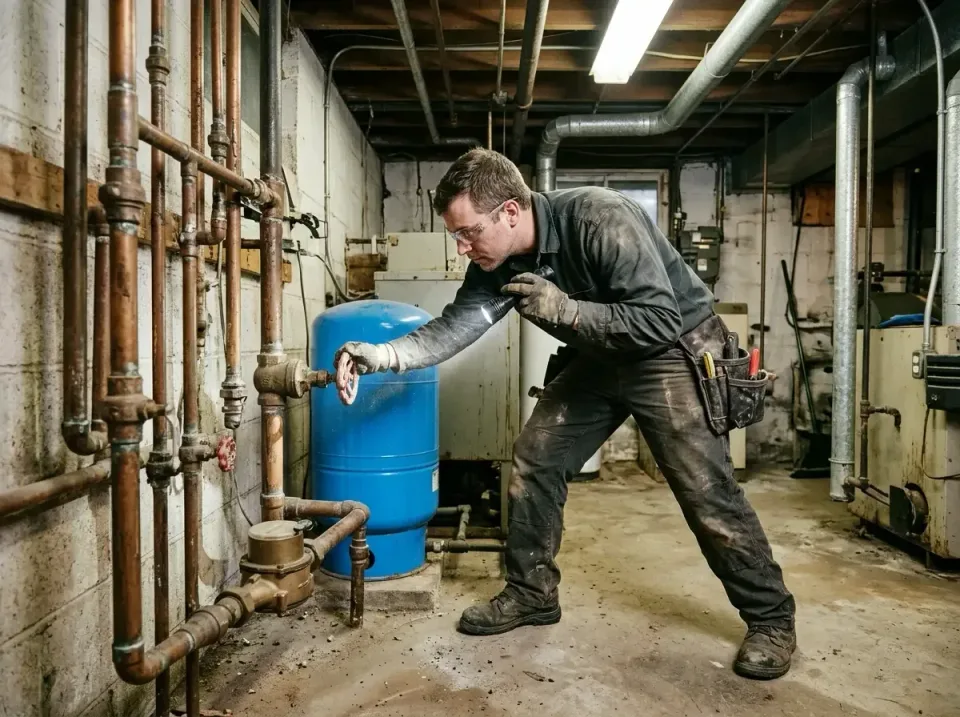
Start by noting which upstairs faucets are weak and whether hot, cold, or both sides are affected. Keep access clear to the main shutoff and basement mechanical area; do not move equipment or open electrical enclosures.
Ice formation can obstruct outdoor plumbing and hose bibs, so a frozen exterior tap may complicate a simple pressure check do not force it open. For a visit, identify any well pump and tank locations and make sure the plumber can reach the affected fixtures.
Near Minneapolis-Saint Paul International Airport, allow for the same practical access planning as anywhere else in Minnesota; the airport itself does not explain household pressure. Paul Bunyan State Trail and Mankato Minneopa State Park are regional landmarks, while the useful preparation is at home: protect floors near plumbing access and mention any recent shutoff or suspected leak.
Get a Clear Reading on Upstairs Faucet Pressure
One weak upstairs faucet may need a fixture check; several weak taps call for comparing the supply and branch flow. A hose-bib gauge can show the system’s pressure, while testing flow at affected fixtures helps show where it falls.
Summer humidity can increase indoor condensation, so do not assume moisture near a pipe is a leak look for active dripping and have uncertain conditions checked. From Blue Mounds State Park to the Duluth Aerial Lift Bridge and Headwaters of the Mississippi River, Minnesota homes differ, but a clear diagnosis begins with measurements.
For help finding the cause, contact Minnesota Plumbing Pros and ask about water pressure testing. We’ll explain the findings and repair plan before work begins.