Minnesota Winter Freezes Can Trigger Sudden Pressure Loss
A sudden pressure drop during a Minnesota freeze can come from a restricted or damaged water line, but a private well’s water level can also be part of the problem. Northern Minnesota’s longer, colder winters can leave homeowners with more prolonged exposure to freezing conditions, so check vulnerable plumbing and note whether every fixture is affected.
A well that draws from a lower water level during drought may struggle to maintain supply even when no pipe is frozen. The Minnesota Zoo is a useful local reference for families comparing conditions across the metro and wider state; the same symptoms still need a system-specific diagnosis. Start with the pattern, not a guess.
Can a freeze explain pressure falling overnight?
Yes. Water pressure that suddenly drops during a cold spell can point to a frozen or damaged section of plumbing, especially if several fixtures weaken at once.
Cold winters increase frozen-pipe and pressure-loss risks, but a freeze is not the only possible cause: a regulator, supply problem, or well equipment may produce similar symptoms. Check whether neighboring homes have a supply issue and whether the drop affects hot, cold, or both lines.
Do not keep running water through a suspected frozen line; a blockage can conceal damage that becomes a leak as conditions change.
At the Minnesota State Capitol, a winter visit may mean cold outdoor exposure; at home, the key is where pipes pass through unheated spaces. Spring freeze-thaw cycles can stress buried water lines, so a pressure change that persists beyond a cold snap deserves investigation rather than repeated DIY thawing.
What does thawing reveal about the line?
Rapid thawing can uncover damage that was not obvious while ice restricted the flow. A split or weakened pipe may begin leaking as water returns, so look for damp flooring, new wall stains, or water near the service entry. Stop using water and locate the main shutoff if you see active leakage. A dry-looking surface does not rule out a leak inside a wall or below a floor.
We test before recommending a repair. That means comparing pressure and flow at appropriate points and checking the accessible line and equipment, rather than assuming every winter pressure loss needs a pipe replacement. Around the Headwaters of the Mississippi River, seasonal changes are part of the landscape; inside a home, changing pressure calls for a measured diagnosis.
When should you DIY or call a plumber?
If one faucet is weak, clean its aerator and compare another fixture. If the entire home loses pressure, you see a leak, or a pipe may be frozen behind a wall, stop experimenting and call a qualified plumber.
Never use an open flame to thaw plumbing. Severe thunderstorms may cause power interruptions, which can also stop a well system and mimic a plumbing failure; check for an outage before changing pump settings.
Southern Minnesota can experience strong summer storms, so a pump-related pressure issue may appear in a different season too. Hot summers can raise household water demand, making an existing supply limitation more noticeable when several taps run.
For an overnight change, our pressure-loss checks can help you sort observations before service. We also explain the difference between local and whole-house symptoms in our guide to upstairs faucets losing pressure.
What should a professional test first?
The first step is to determine whether the issue is at the supply, equipment, or a particular branch of piping. We record pressure and flow, inspect accessible areas, and ask when the change began and which fixtures are affected. If a well serves the home, the pump and tank become part of the evaluation; if the home is on municipal supply, the service line and interior plumbing need to be distinguished.
A weak shower throughout the house can also come from a restriction rather than a freeze. Our clogged-line guide covers that symptom.
Minnesota Plumbing Pros has served Minnesota for more than 10 years, and our crew explains findings in plain language before work begins. We protect the home around the access area and coordinate the next step with the occupants.
Which Pressure Repair Fits a Winter Drop?
If pressure stays low after a freeze, the right repair depends on whether the restriction is in the supply, well system, or home plumbing. A booster is not a fix for a frozen or blocked line.
Canal Park visitors may notice severe weather along the lakeshore, while at home heavy rainfall can affect shallow wells and drainage; check the well system as well as the pipes. A power outage can stop an electric well pump, so confirm electricity before assuming the pump has failed. For multifamily properties near the Mall of America or Rochester Mayo Clinic, coordinate access and tenant disruption before shutting water off.
| Option | Best for | Key detail |
|---|---|---|
| Municipal supply diagnosis | Whole-home pressure loss on city water | Check supply before interior repairs |
| Well system pressure repair | Low pressure in a well-served home | Pump and pressure tank need assessment |
| Booster pump installation | Verified low supply pressure | Sized for required flow, not guessed |
| Regulator repair | Pressure control problem | Common setting is 40–60 PSI |
| Water line repair | A confirmed restriction | A residential service line is often 3/4–1 inch |
Ask what readings support the diagnosis and whether occupants need to plan for a water shutoff.
How Do You Prepare for a Winter Pressure Check?
Before service, note the change and make the plumbing access safe. Ice can obstruct outdoor plumbing and hose bibs, so do not force an exterior fixture open. A clear mechanical room saves time.
-
Record symptoms: Note when pressure changed and whether hot, cold, or all fixtures are affected.
-
Locate the shutoff: Identify the main water shutoff and keep its path clear for safe access.
-
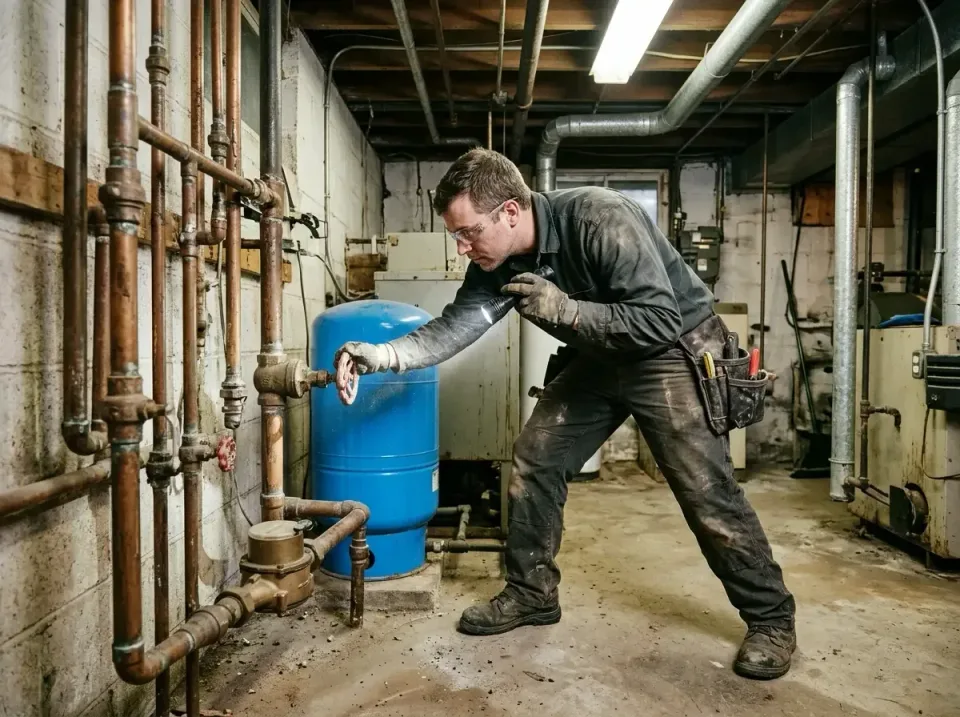
Clear the work area: Move stored items away from the regulator, pipes, and mechanical room.
-
Identify well equipment: If you have a well, show the plumber the pump and tank locations.
-
Coordinate access: Arrange access to affected fixtures and tell occupants if a water shutoff may be needed.
Homeowners near Como Park Zoo and Conservatory or Mankato Minneopa State Park should use the same practical prep: keep the work area accessible, not just the outdoor entry. Minneapolis-Saint Paul International Airport is another familiar regional landmark, but no trip or schedule should replace checking for an active leak. Protect nearby floors before the technician arrives.
Get a Measured Answer to a Winter Pressure Drop
A freeze can cause a sudden drop, but the symptom alone does not prove that a pipe has frozen. Subzero cold snaps can freeze exposed service lines, so check accessible areas for visible leaks and shut off water if damage appears. Do not attempt to thaw a hidden line with a flame.
A home near the Boundary Waters Canoe Area Wilderness or Itasca State Park may have different plumbing and access conditions than a metro home, and U.S. Bank Stadium is a familiar Twin Cities landmark for our statewide service area.
Our crew can inspect the system, explain the likely cause, and outline the repair before work begins. For testing and a practical next step, contact Minnesota Plumbing Pros about water pressure testing or call (877) 773-0781.