Could a Minnesota Winter Affect Hot-Water Flow?
When cold taps run normally but hot taps trickle, the restriction is often on the hot side rather than in the home’s shared supply. A tank problem is possible, but a narrowed or damaged hot-water pipe can produce the same symptom, so the pattern matters.
| What you notice | What it may suggest |
|---|---|
| One hot faucet is weak | Local faucet or branch restriction |
| Several hot faucets are weak | Shared hot-water outlet or piping issue |
| Flow changed after a thaw | Have exposed plumbing checked for damage |
| Hot flow varies with season | Ask a plumber to inspect vulnerable pipe joints |
Minnesota’s cold winters make exposed plumbing more vulnerable to freezing and pressure loss; a cold spot near a service line deserves attention. Rapid thawing can reveal damage that was hidden by ice, so look for dampness as flow returns.
Seasonal temperature swings also work on pipe materials and joints, making an older connection more likely to leak or constrict. We can compare the hot-side flow at affected fixtures before recommending a repair.
Does weak hot flow point to the tank or pipe?
If cold water is normal at the same faucet, start by looking for a restriction in the hot-water path. A tank can contribute, but a weak stream alone does not prove the tank has failed. Check more than one fixture: a single affected faucet points toward its fixture or branch, while weak hot flow at several taps makes a shared outlet or hot-water line more likely.
We have seen homeowners replace a faucet before noticing that every hot tap in the home had the same problem. That step costs time and misses the pattern. A useful first check is to compare the hot and cold streams at two or three fixtures, then note whether the hot side weakens further when another hot tap opens.
What can a frozen service line do?
A subzero cold snap can freeze an exposed service line and sharply restrict water movement. If an exposed line runs through a cold area, do not assume a low hot stream means the tank is worn out; the location and which fixtures are affected can change the diagnosis. Avoid applying an open flame or forcing a frozen pipe, since that can create additional damage.
Landmark names help illustrate how widely conditions differ across Minnesota: a property near Brainerd International Raceway may have different exposure and building conditions than one near Glensheen Mansion. That is not a claim about either location’s plumbing.
It is a reminder to identify the actual pipe route, exposure, and affected fixtures at your home before choosing a repair. For other cold-weather pressure symptoms, see our guide to Minnesota winter freezes and sudden water pressure drops.
When should you call a plumber?
A homeowner can safely compare hot and cold flow and check whether the problem affects one fixture or several. Stop at observation if you find a leak, suspect a frozen line, or would need to open piping near the water heater. Hot-water equipment and pressurized plumbing can cause injury or water damage if handled incorrectly.
Call for diagnosis when several hot taps stay weak, flow declines suddenly, or visible moisture appears. Our crew tests the system and explains the likely cause before work starts.
A hot-water pressure repair visit can help distinguish a fixture restriction from a shared pipe or tank-side concern. We also explain what we find in plain language and protect nearby floors during work.
How does a Minnesota location change the check?
Subzero cold snaps can freeze exposed service lines, so pipe exposure matters alongside fixture symptoms. A home near Pipestone National Monument or Willmar Robbins Island Regional Park is not automatically more likely to have a particular plumbing fault; those landmarks simply ground the broad area our Minnesota crew serves. The specific property, pipe route, and symptoms determine what we inspect.
For example, a line exposed to outdoor air may need a different inspection than a hot-water branch routed indoors. We check the accessible piping and compare fixture behavior rather than naming a part from a single symptom. If a weak shower is the main complaint, our article about a clogged line and a weak shower throughout the house explains why a restriction can affect more than one outlet.
Which Hot-Water Pressure Check Fits Your Symptoms?
When several hot taps are weak but cold flow seems normal, choose an inspection based on whether the problem follows one fixture, a hot-water branch, or the wider supply. Hot summers can raise household water demand, so a symptom that appears during busy periods is worth recording rather than automatically blaming the tank. A home near the Bemidji Paul Bunyan and Babe Statues or Lake Bemidji State Park still needs a diagnosis based on its own plumbing.
| Option | Best for | Key detail |
|---|---|---|
| Hot-water pressure diagnosis | Weak hot flow with normal cold | Compare affected fixtures and hot-side flow |
| Whole-house pressure testing | Unclear or changing symptoms | Static pressure is checked with fixtures closed; flowing pressure while water runs |
| Clogged water line repair | A restriction appears along a pipe | A clogged pipe can limit flow despite normal supply pressure |
| Pressure-reducing valve repair | Incoming pressure needs investigation | A regulator limits incoming pressure; common settings are 40–60 PSI |
Ask which fixtures will be tested and whether measurements will be taken with water running.
How Should You Prepare for a Hot-Flow Inspection?
Make the symptom easy to reproduce. In northern Minnesota, longer, colder winters can make exposed plumbing a useful inspection point; spring freeze-thaw cycles can also stress buried water lines, so mention any seasonal change you noticed.
-
Record affected taps: Note which hot fixtures are weak and whether their cold streams seem normal.
-
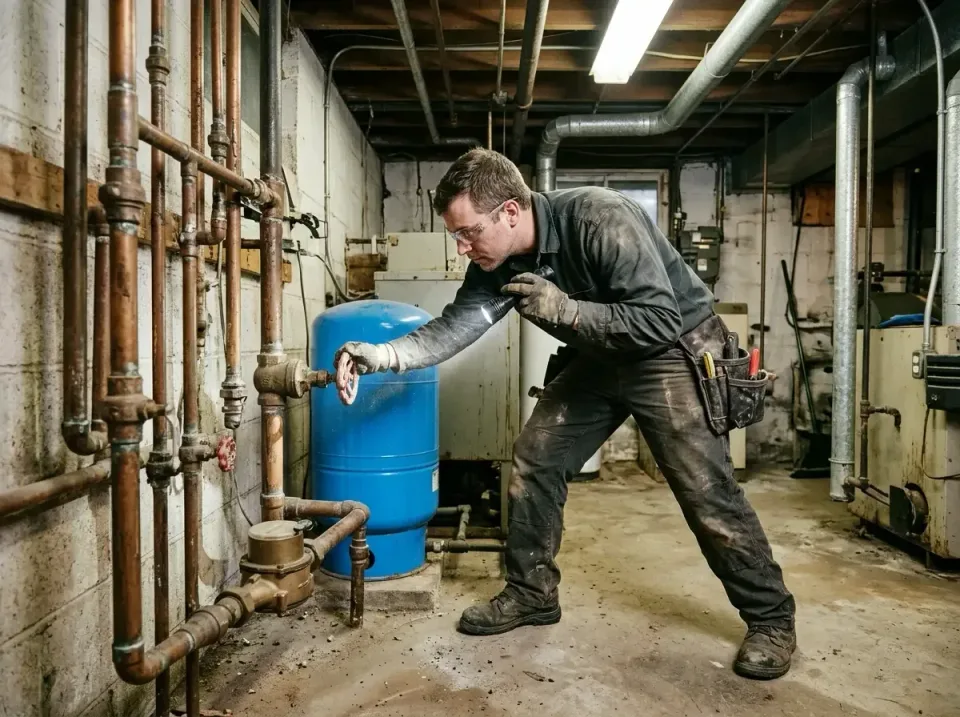
Prepare access: Clear the basement mechanical area and the route to visible hot-water piping.
-
Identify equipment: Tell the plumber where the water heater and any well equipment are located, if applicable.
-
Protect the work area: Move items away from plumbing access and keep the floor clear.
-
Coordinate access: Make sure the plumber can reach each affected fixture and discuss any needed water shutoff with occupants.
A Duluth Aerial Lift Bridge visit may be a familiar local reference, but the practical preparation is the same statewide: clear access helps the plumber follow the pipe path without delay.
Get a Clear Answer on Weak Hot-Water Flow
Normal cold flow alongside weak hot flow usually directs attention toward the hot-water side, but it does not identify a failed tank by itself. Record which fixtures are affected and whether the problem is steady or changing before arranging an inspection.
For private-well homes, drought can lower water levels and affect the system’s available supply, so mention that context if it applies. Snowmelt can also saturate basements and utility access areas; avoid entering a wet mechanical space if equipment or electrical components are exposed.
In southern Minnesota, strong summer storms can bring another reason to report recent disruptions. Minnesota Plumbing Pros can inspect the symptoms and explain the repair plan before work begins. Request Low Hot Water Pressure Repair or call (877) 773-0781.